Winter Solstice in Lochaber
21st December 2025
Overnight the freezing level dropped to around 700 metres before rising back up around 1100 metres during the day. The surface of the previously damp snowpack froze overnight, and in some locations the resulting surface crust was enough to support a person’s weight, in other places it was not. Through the day the snowpack began to soften again.
The cloud hung around the summits all day so there was no sun to be seen. However, being the winter solstice, if the sky had been clear then the sun’s maximum height above the horizon would only be around 10°. The winter solstice is the time at which the northern hemisphere tilts furthest from the sun. Currently this tilt (the obliquity of the ecliptic) is about 23.4°, but varies between 22.1° and 24.5°, over a period of about 41,000 years.
Despite the fact that today is the shortest day, it has neither the latest sun rise, or the earliest sun set of the year. The sun sets slightly earlier (by about 2 minutes in Lochaber) from about the 11th to 17th of December, and rises slightly later (again by about 2 minutes) during the period from about 24th to the 31st of December. The reason for this is the change in the local solar noon which is at 12.09 on the 1st of December changing to 12.23 on the 31st of December. Over the course of the year (when accounting for the clocks changing in October and March) solar noon changes by about half an hour so. The reason for this is associated with the tilt of the earth and the elliptical nature of it’s orbit.
On the subject of the earth’s elliptical orbit, the winter solstice coincidently occurs close to the time when the earth is actually closest to the sun. The perihelion as it is called, occurs in about a fortnights time when the earth is approximately 93 million miles or, in percentage terms, 3.4% closer to the sun than it is in July. The incoming solar radiation on Earth varies by about 6.8% through the year peaking in early January. Obviously the tilt of the earth significantly overrides this effect, which is why despite being closer to the Sun the Northern Hemisphere is colder in January than it is in July. In fact, averaged over the whole of the earth’s surface it is colder in January than July because the Northern hemisphere has more land which warms up and cools down more with the seasons than the ocean dominated Southern hemisphere.
However, in the shorter term the longest night of the year won’t be associated with low temperatures here in Lochaber. The forecast is for the freezing level to rise above the summits overnight with some light rain expected tomorrow. The snowpack will soften and start to thaw, but hopefully not too rapidly. Hopefully we won’t lose too much snow before some cooler conditions arrive mid-week.
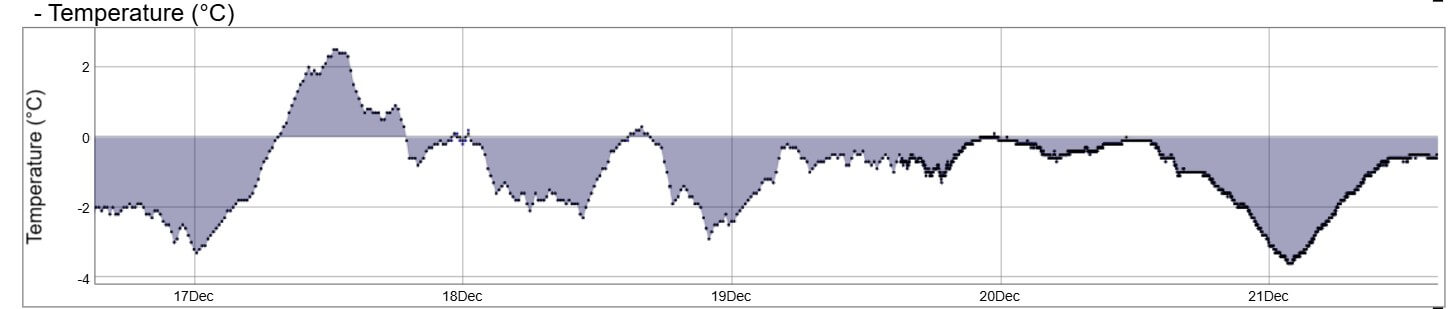
Aonach Mor summit temperature over the previous five days. Last night it got down to almost -4°C, with the freezing level briefly dropping to around 700 metres.

Looking South towards the higher Lochaber hills. Maybe a bit of sunshine far to the West, but the higher hills were in cloud all day.
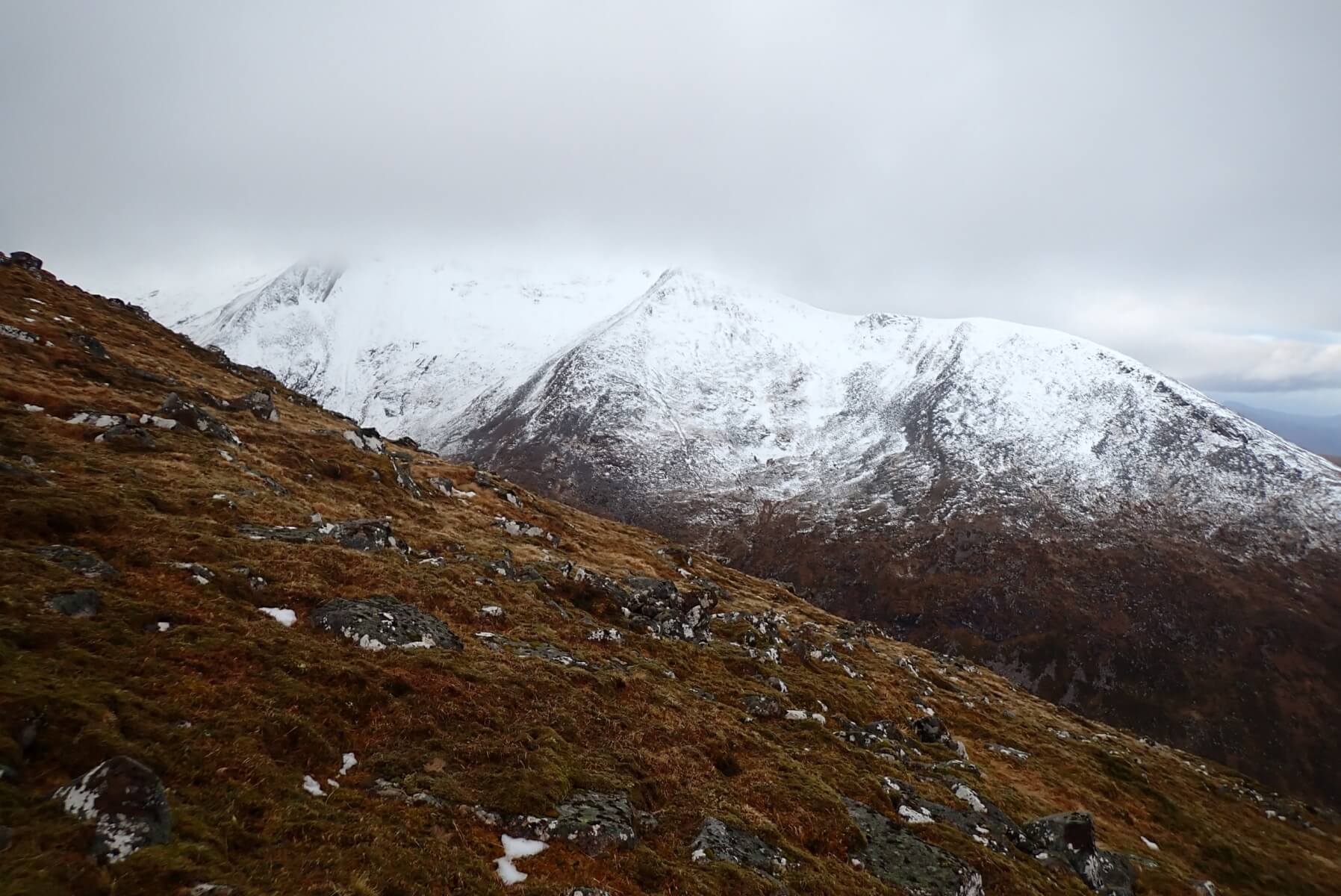
The view over to the Carn Mor Dearg ridge.
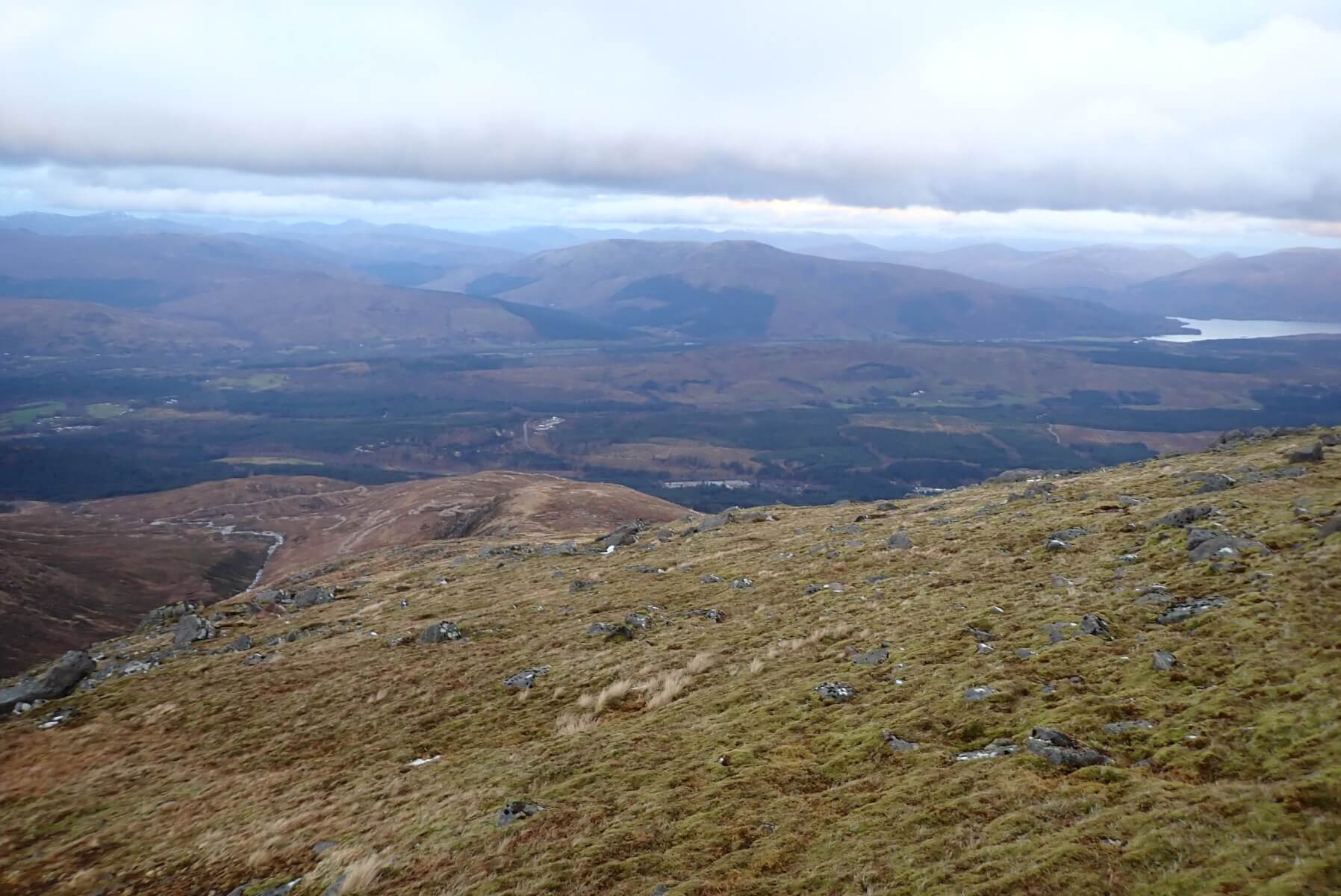
Not much snow looking up to the North.
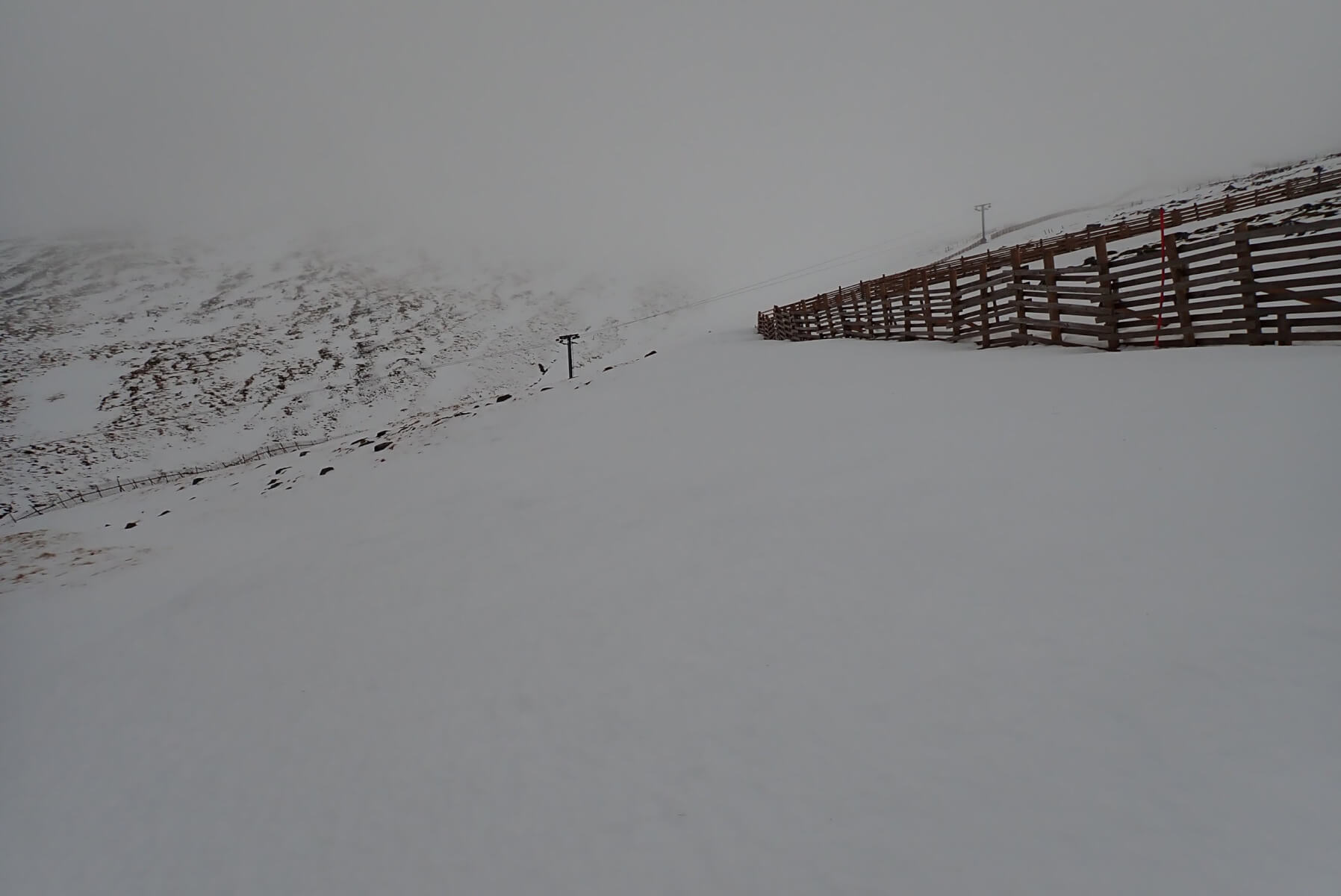
However, a fair bit of snow when looking into the ski area. This photo was taken at roughly the same altitude as the previous photo. The snow distribution can be very aspect specific.
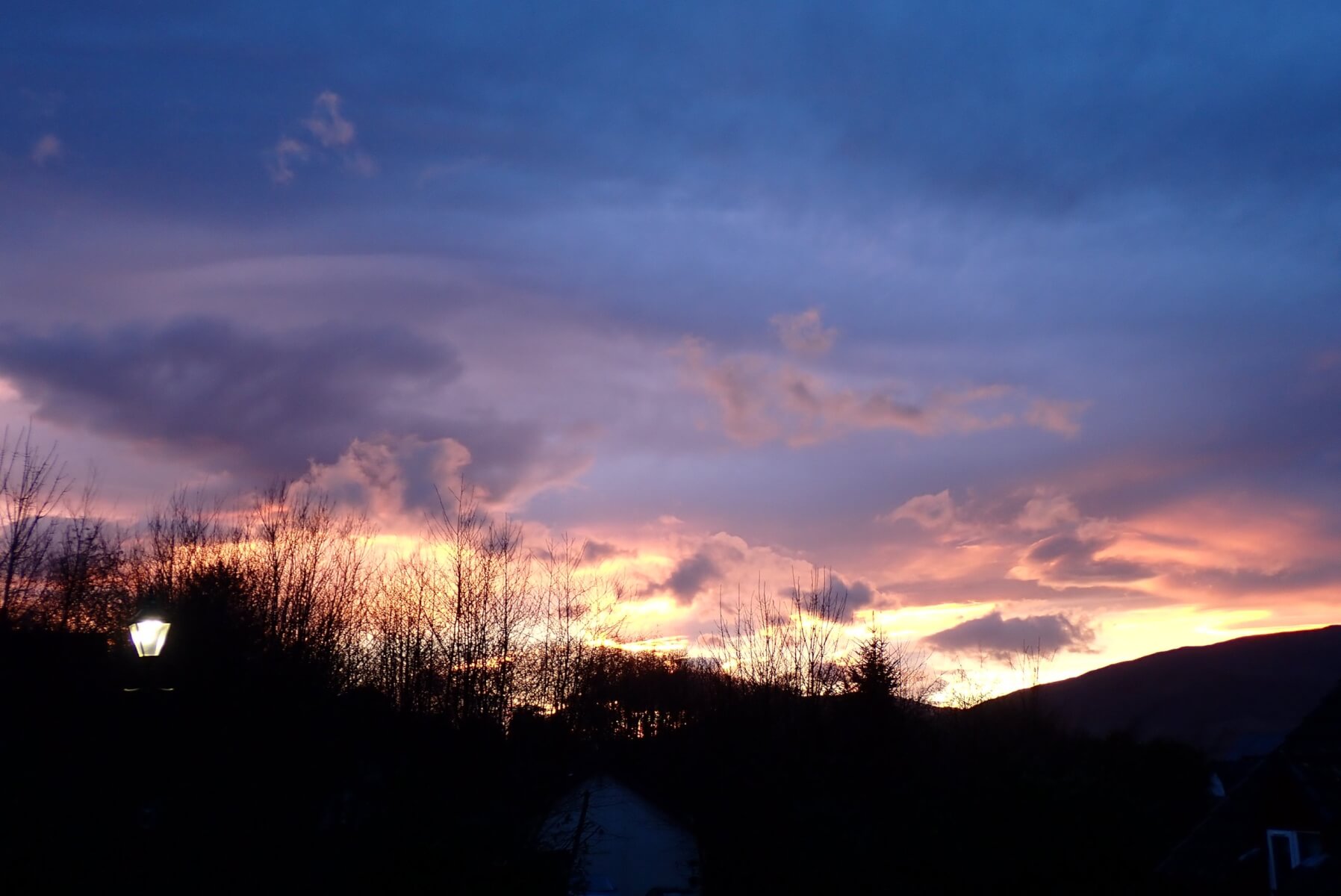
I nice sky in Lochaber as the sun sets on the shortest day of the year.
Comments on this post
Got something to say? Leave a comment





Colin
21st December 2025 9:25 pm
Interesting stuff. Thanks for all that detail on my birthday! Let’s hope for some more snow soon!