More snow (and more graphs)
24th March 2026
After some overnight rain there was a bit more precipitation during the day than was forecast. This was initially snow only on the higher summits but was snow down to around 600 metres by early afternoon. There was some drifting with strong but easing South-Westerly winds.
It’s forecast to get colder with further snow tonight and tomorrow.
Some photos from the East side of Aonach Mor below.
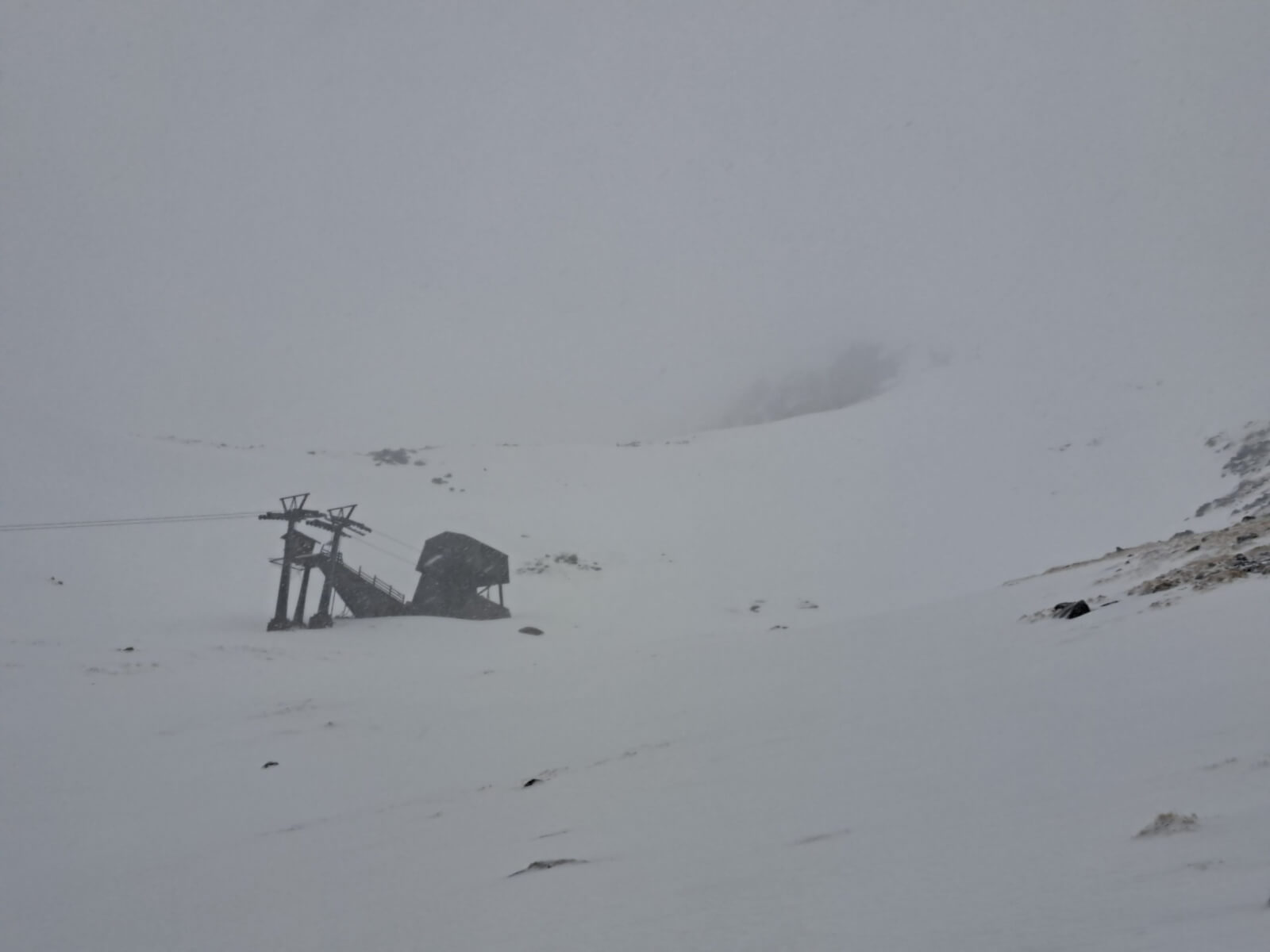
Looking up Coire Dubh to Braveheart Chair and Climbers Col.
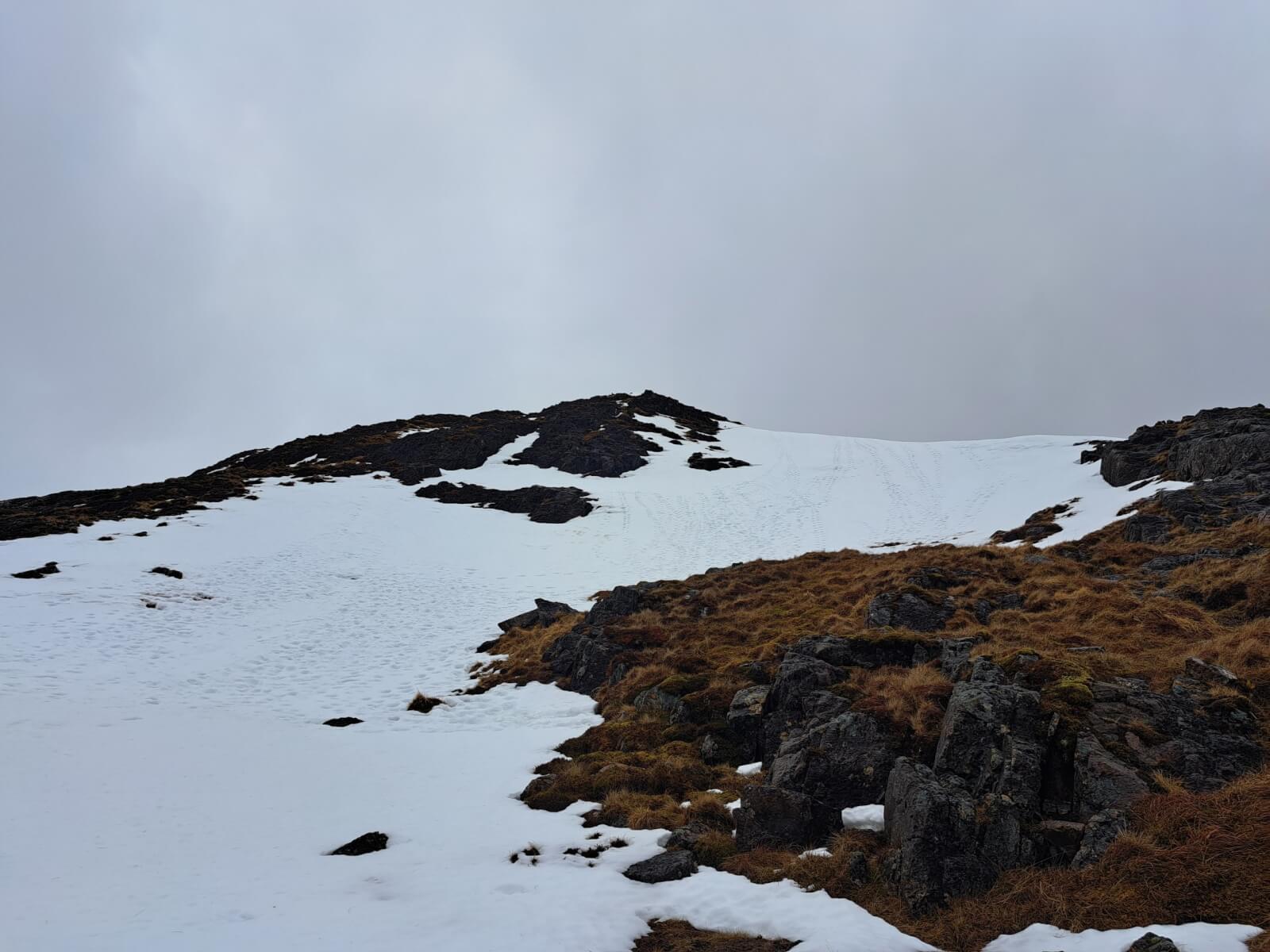
Judging by the footprints, I think Aonach an Nid has been a popular venue for winter skills groups recently.
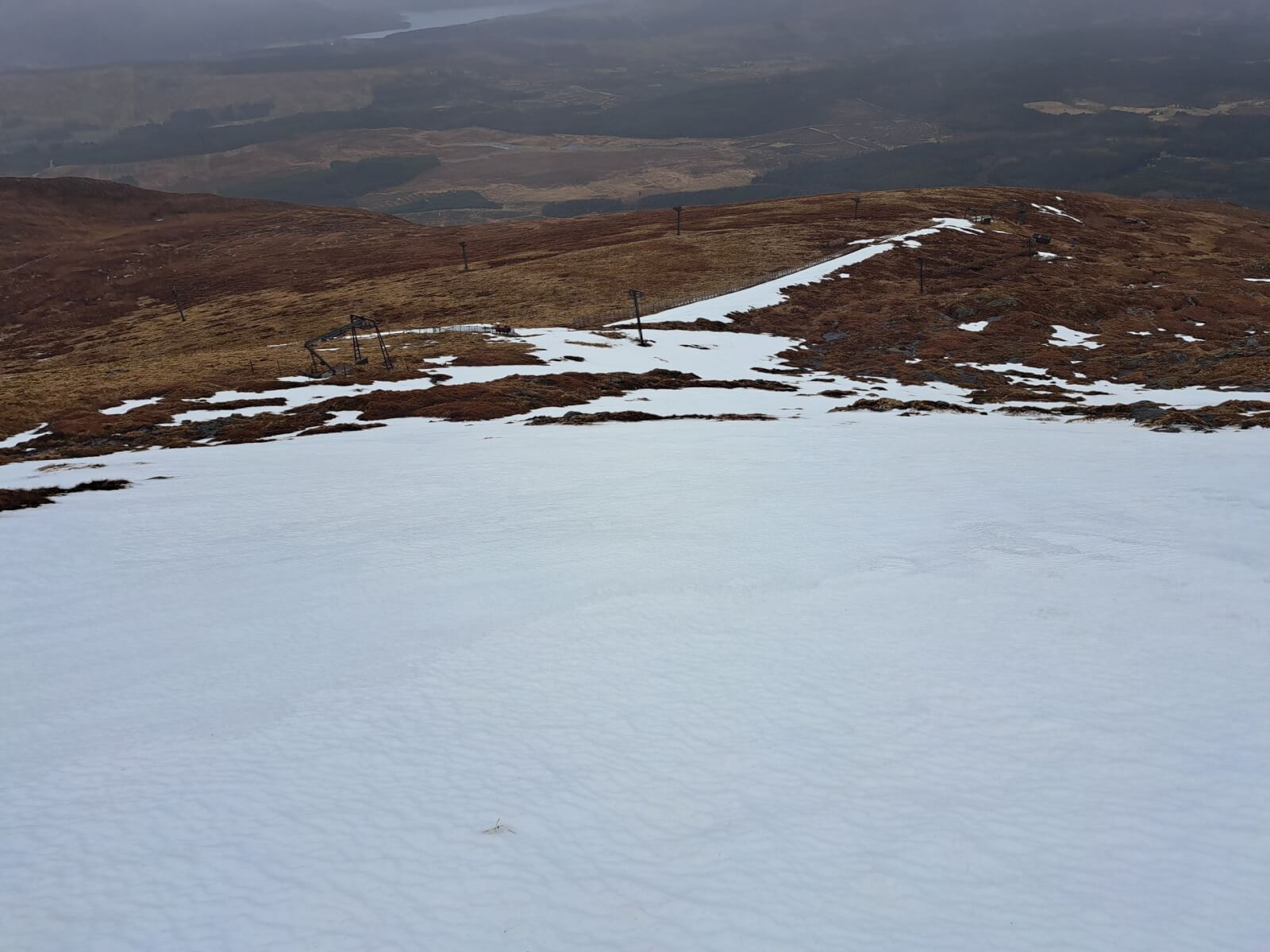
Looking down Aonach an Nid to Rob Roy.
Following on from my post on Sunday below are some further findings from the analysis of the SAIS recorded avalanche data.
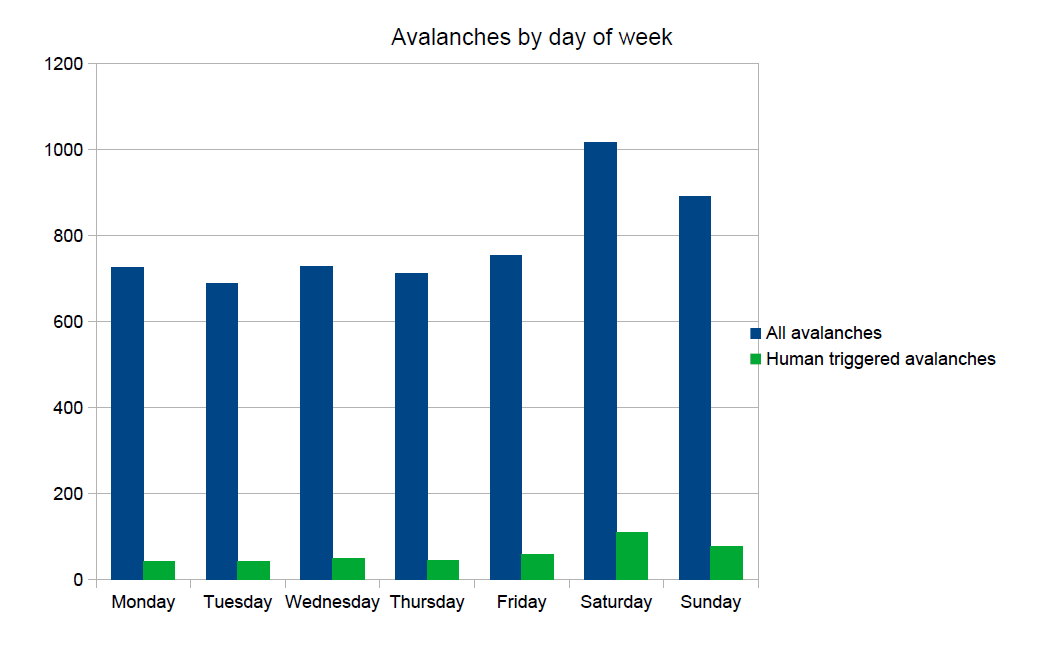
The mountains are busier at the weekends so it’s not surprising that there are more human triggered avalanches at the weekend. There are also more natural avalanches recorded at the weekend and I suspect that this is because there are more people out in the mountains to see and report them. There is also the possibility that avalanches that happened during the week are recorded as happening at the weekend as this is when the debris is seen.
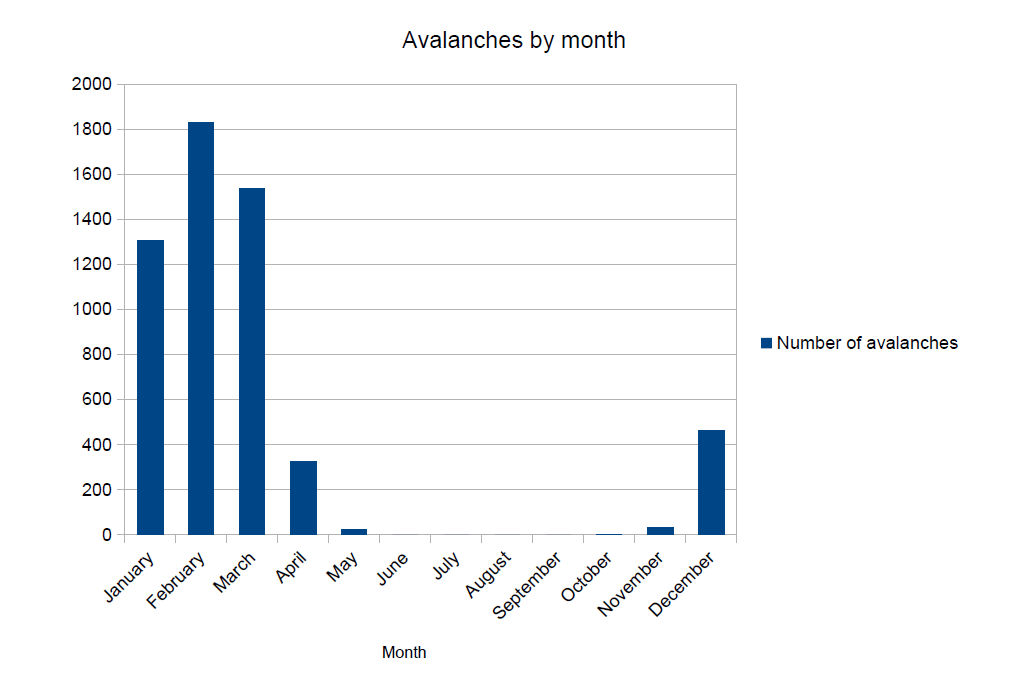
As I expected most avalanches occurred in the months January, February and March although I’m slightly surprised that there are more avalanches in March than in January. This could be influenced by better weather, more daylight and more people in the mountains in March meaning that more of the avalanches that happened were recorded in comparison to January.
Numbers in the summer months are too low to show up on a bar chart at this scale but no avalanches have been recorded in June, July, August or September with 3 in October.
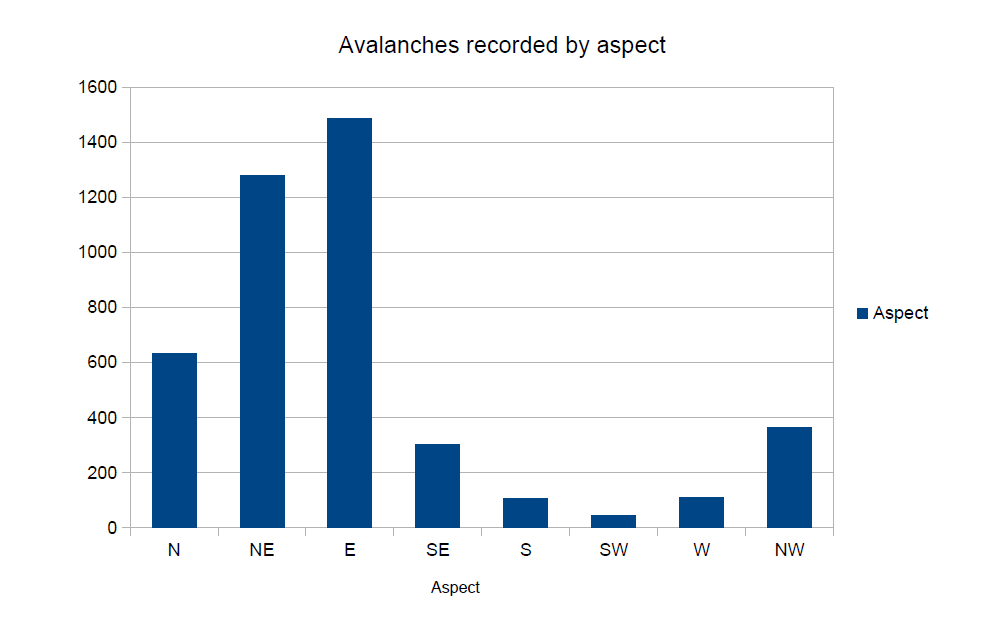
The vast majority of avalanches are on North-East and East aspects. This is very likely to be because our prevailing winds are Westerly and South-Westerly.
There is a problem with some of the older data where zero has been stored as the aspect when the aspect hasn’t been entered. This means that the number of avalanches on a North aspect will be too high but I don’t think it’s by a lot.
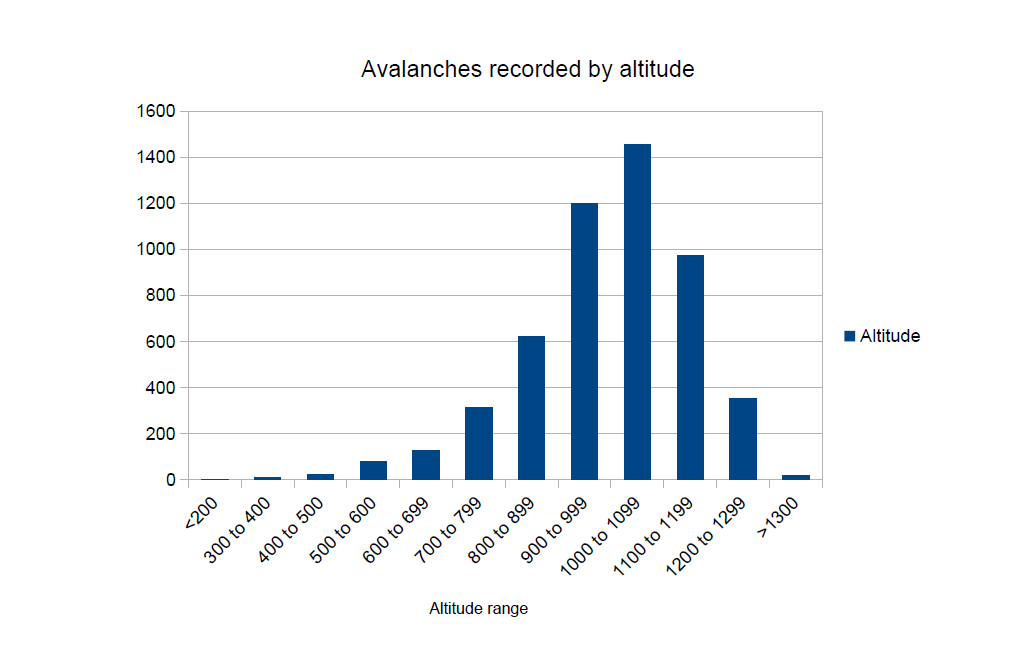
As expected, the number of avalanches increases with height up to 1099 metres. It then decreases due to the smaller number of locations at higher altitudes. The 2 avalanches at <200 metres were both checked and seem correct from the description.
Comments on this post
Got something to say? Leave a comment